
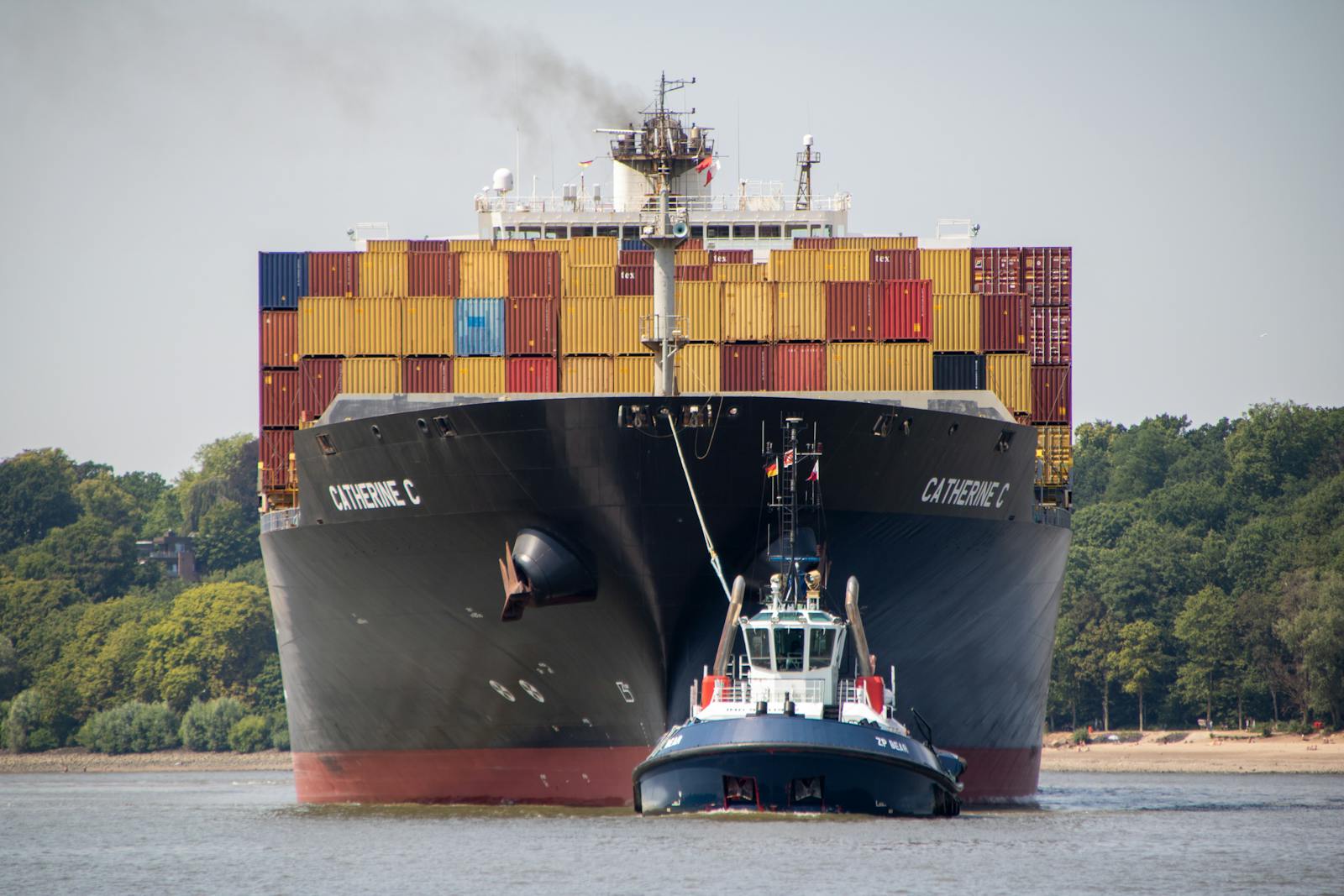
What is FCL Shipping?
FCL (Full Container Load) means you book an entire shipping container exclusively for your cargo. The moment your goods are loaded into the container at the origin, it remains sealed until it reaches its final destination. No other shippers' cargo is mixed with yours throughout the journey.
FCL shipping is the preferred choice for businesses importing large volumes of goods to Kenya. It offers greater security, faster transit times, and often works out more economical per unit when shipping substantial cargo quantities.
Advantages of FCL Shipping
- Cost-effective for large shipments: When your cargo exceeds 15-20 cubic meters (CBM), FCL typically offers better value than LCL
- Faster transit times: Direct loading without consolidation stops means your cargo arrives sooner
- Greater cargo security: Sealed container from origin to destination minimizes handling and theft risk
- Flexible container options: Choose from 20ft, 40ft, High Cube, reefer, or flat rack containers
- Simpler customs process: Single shipment, single bill of lading, streamlined clearance at Mombasa
- Better for sensitive goods: Ideal for electronics, machinery, or products requiring controlled environments
Disadvantages of FCL Shipping
- Higher absolute cost: You pay for the entire container regardless of utilization
- Minimum volume required: Not economical for small shipments under 10 CBM
- Longer loading time: Requires coordination to fill container before departure
What is LCL Shipping?
LCL (Less than Container Load) means your cargo shares a shipping container with goods from other exporters. Your portion of the container is designated as a "consignment" or "share." LCL is ideal when your shipment is too small to fill an entire container but urgent enough to warrant sea freight rather than air cargo.
At the origin port, your cargo is consolidated with other shippers' goods at a Container Freight Station (CFS). At Mombasa, the consolidated container is deconsolidated, and your specific cargo is separated for customs clearance and delivery.
Advantages of LCL Shipping
- Lower upfront cost: Pay only for the volume your cargo occupies
- No minimum volume: Ship as little as 1 CBM without committing to a full container
- Frequent departures: Consolidation vessels sail more regularly than dedicated FCL vessels
- Reduced inventory costs: Smaller shipments allow for more flexible inventory management
- Testing new markets: Ideal for businesses testing Kenyan market demand with limited inventory
Disadvantages of LCL Shipping
- Higher per-unit cost: LCL rates are calculated per CBM with minimum charges
- Longer transit times: Consolidation and deconsolidation add 3-7 days to journey
- More handling: Multiple lifts during consolidation increase damage risk
- Complex customs: Each shipper's portion requires individual documentation
- Potential delays: Other shippers' documentation issues can affect your cargo release
LCL Crossover Point: When your cargo exceeds approximately 15-20 CBM, FCL shipping typically becomes more cost-effective. However, always request quotes for both options as rates fluctuate based on market conditions, origin port, and season.
Container Types & Capacities
Understanding container specifications helps you plan your FCL shipment efficiently and maximize container utilization.
| Container Type | Internal Dimensions (L×W×H) | Capacity | Best For |
|---|---|---|---|
| 20ft Standard | 5.9m × 2.35m × 2.39m | 33 CBM / 28 tons | Heavy machinery, vehicles, bulk commodities |
| 40ft Standard | 12.03m × 2.35m × 2.39m | 67 CBM / 26 tons | General imports, consumer goods, textiles |
| 40ft High Cube | 12.03m × 2.35m × 2.69m | 76 CBM / 26 tons | Light, bulky cargo, furniture, machinery parts |
| 20ft Reefer | 5.44m × 2.26m × 2.27m | 28 CBM / 27 tons | Perishables, pharmaceuticals, flowers |
| 40ft Reefer | 11.58m × 2.28m × 2.50m | 59 CBM / 29 tons | Large perishable shipments, frozen goods |
| 20ft Flat Rack | 5.94m × 2.40m × 2.35m | No roof, collapsible sides | Oversized cargo, project equipment, vehicles |
Weight Limits: Kenya roads and ports have strict weight regulations. A 20ft container loaded to maximum volume may exceed the 28-ton weight limit due to cargo density. Factor weight into your loading calculations.
How to Calculate Your Cargo Volume (CBM)
CBM Calculation Formula
Formula: Length (meters) × Width (meters) × Height (meters) = Cubic Meters (CBM)
Example: A pallet measuring 1.2m × 1.0m × 1.5m = 1.8 CBM
Multiple Cartons: Calculate each carton's CBM, then add together. For 10 cartons of 0.5m × 0.4m × 0.3m = 0.06 CBM each × 10 = 0.6 CBM total.
Tip: For LCL, 1 CBM = approximately 167 kg. If your cargo is heavier, you may be charged by weight instead of volume (whichever is greater).
FCL vs LCL: Side-by-Side Comparison
This comparison table summarizes the key differences between FCL and LCL shipping to help you make an informed decision:
| Factor | FCL (Full Container) | LCL (Shared Container) |
|---|---|---|
| Minimum Volume | Approximately 15-20 CBM for cost effectiveness | As low as 1 CBM |
| Cost Structure | Fixed container rate regardless of fill | Per CBM rate with minimum charge (2-3 CBM minimum, whichever is greater) |
| Transit Time | Standard vessel schedule | Adds 3-7 days for consolidation |
| Cargo Security | Sealed from origin to destination | Multiple handling points |
| Documentation | Single Bill of Lading | House Bill + Master Bill |
| Customs Clearance | Streamlined single shipment | Individual customs entries required |
| Handling Required | Loading and unloading only | Consolidation, loading, deconsolidation |
| Scheduling Flexibility | Tied to vessel departure schedules | More frequent consolidation sailings |
| Best For | Large volumes, high-value cargo, time-sensitive | Small shipments, market testing, limited inventory |
Free Download: Get our complete FCL vs LCL Shipping Comparison Guide — includes container capacity charts, cost calculators, and transit time tables. Download PDF →
When to Use FCL vs LCL Shipping
Choosing between FCL and LCL depends on several factors specific to your shipment. Here are practical guidelines:
Choose FCL When:
FCL Recommended For
- Your cargo exceeds 15-20 cubic meters in volume
- You're shipping high-value electronics, machinery, or fragile goods
- Delivery timeline is critical (adds 3-7 days of speed)
- You need temperature-controlled (reefer) container for perishables
- You're importing vehicles, motorcycles, or oversized cargo
- Your supplier can fill a container with mixed products
- You want simplified customs clearance at Mombasa
Choose LCL When:
LCL Recommended For
- Your cargo is under 15 cubic meters
- You're testing new products in the Kenyan market
- Budget constraints limit large upfront shipping costs
- Your supplier cannot fill an entire container
- You need flexibility to ship smaller, more frequent orders
- You're importing non-fragile consumer goods
- Market demand doesn't justify large inventory commitments
Cost Breakdown for Shipping to Kenya
Understanding the total cost of shipping to Kenya helps you budget accurately. Here's a breakdown of charges you can expect:
FCL Shipping Costs
| Cost Component | Typical Range (USD) |
|---|---|
| Ocean Freight (20ft) | USD 1,500 - 3,500 |
| Ocean Freight (40ft) | USD 2,500 - 5,500 |
| Origin Charges (Handling, Documentation) | USD 150 - 400 |
| Mombasa Port Charges (per TEU) | USD 150 - 500 |
| CFS Handling (if applicable) | USD 50 - 150 |
| Customs Brokerage Fee | USD 100 - 300 |
| Transport to Destination | USD 200 - 800 (varies by location) |
LCL Shipping Costs
| Cost Component | Typical Range |
|---|---|
| LCL Ocean Freight Rate | USD 30 - 80 per CBM |
| Minimum Charge (Minimum CBM) | 2-3 CBM minimum charged (whichever is greater between actual volume and minimum) |
| Consolidation Fee (Origin CFS) | USD 20 - 50 per CBM |
| Deconsolidation Fee (Mombasa CFS) | USD 25 - 60 per CBM |
| Customs Clearance | USD 80 - 200 |
| Last Mile Delivery | USD 0.50 - 2.00 per CBM (local) |
Total Cost Example: A 20ft FCL container from Shanghai to Mombasa might cost USD 3,500 freight plus USD 800 in origin/destination charges. An LCL shipment of 5 CBM on the same route might cost USD 400-500 total including all fees. Kenya Tradex provides all-inclusive quotes upfront.
Transit Times from Major Origins to Kenya
Shipping transit times vary significantly by origin port. Here's a comparison for both FCL and LCL:
| Origin Port | FCL Transit | LCL Transit |
|---|---|---|
| Shanghai, China | 18-25 days | 22-32 days |
| Shenzhen, China | 18-25 days | 22-32 days |
| Yiwu, China | 20-28 days | 24-35 days |
| Dubai, UAE | 10-14 days | 14-20 days |
| Singapore | 12-16 days | 16-22 days |
| Rotterdam, Netherlands | 21-28 days | 25-35 days |
| Hamburg, Germany | 21-28 days | 25-35 days |
| Mumbai, India | 14-18 days | 18-24 days |
| Los Angeles, USA | 28-35 days (via Pacific) | 32-42 days |
Note: LCL adds 4-7 days to FCL transit times due to consolidation at origin ports (typically Hong Kong, Singapore, or Dubai) and deconsolidation at Mombasa CFS facilities. FCL containers can often bypass CFS and go directly to bonded warehouses for clearance.
Mombasa Port Clearance Process
Whether you choose FCL or LCL, your cargo will clear customs at Mombasa Port, Kenya's largest seaport handling over 95% of the country's trade. Here's what to expect:
Step 1: Arrival Notification
Your freight forwarder receives arrival notice from the shipping line. Documentation is prepared including Bill of Lading, commercial invoice, packing list, and certificate of origin.
Step 2: Customs Entry (IDF Registration)
An Import Declaration Form (IDF) must be obtained from Kenya Revenue Authority (KRA) before cargo arrives. Your customs broker handles this registration using your PIN number and cargo details.
Step 3: Container Release from Port
For FCL: Containers can be moved to a Container Freight Station (CFS) or directly to your bonded warehouse. For LCL: Cargo goes to CFS for deconsolidation before customs inspection.
Step 4: Customs Inspection
KRA selects containers for physical inspection based on risk assessment. Inspection typically takes 2-5 working days. Non-selected containers proceed directly to duty assessment.
Step 5: Duty Payment
Import duties are calculated based on CIF value and HS code classification. Payment is made to KRA via Mpesa, bank, or credit facility before release.
Step 6: Cargo Release
After duty payment and customs clearance, a release order is issued. Cargo can then be transported to your warehouse or final destination.
Need Help with Mombasa Clearance?
Kenya Tradex handles complete customs clearance at Mombasa Port for both FCL and LCL shipments. Get your cargo released faster with our expert brokerage services.
Request Clearance QuoteFrequently Asked Questions
What is the difference between FCL and LCL shipping?
FCL (Full Container Load) means you rent an entire shipping container for your cargo, typically 20ft or 40ft. LCL (Less than Container Load) means your goods share a container with other shippers' cargo. FCL is generally cheaper per unit and faster for larger shipments, while LCL is ideal when you don't have enough cargo to fill a container.
Which is cheaper: FCL or LCL shipping to Kenya?
FCL shipping is typically cheaper per unit volume when your cargo exceeds approximately 15-20 cubic meters. For smaller shipments under 15 CBM, LCL often works out more economical because you only pay for the space your cargo occupies within a shared container.
How long does FCL and LCL shipping take to Kenya?
FCL shipping from China to Mombasa takes 18-25 days, from Dubai 10-14 days, and from Europe 21-28 days. LCL adds 3-7 additional days due to consolidation and deconsolidation processes at origin and destination ports.
What container sizes are available for FCL shipping?
Standard FCL containers include 20ft (33 CBM capacity), 40ft (67 CBM), and 40ft High Cube (76 CBM). For oversized cargo, flat rack and open-top containers are available. Temperature-controlled (reefer) containers are used for perishables.
Is LCL shipping safe for my cargo?
Yes, LCL shipping is safe when handled by experienced freight forwarders. Cargo is palletized, wrapped, and labeled before consolidation. Each shipper's goods are separated and documented. However, for fragile, high-value, or hazardous items, FCL provides additional protection from potential handling damage.
What are the port charges at Mombasa for container clearance?
Mombasa Port charges include container handling fees (USD 150-500 per TEU), port dues, and storage fees after free days (4 days for local imports, 15 days for transit cargo). Kenya Tradex handles all port formalities including KRA customs clearance, KPA terminal releases, and CFS (Container Freight Station) processing.
Ready to Ship to Kenya?
Get a complete shipping quote including FCL or LCL rates, Mombasa clearance, and delivery to your destination. Kenya Tradex provides transparent, all-inclusive pricing.
Ocean Freight Services