
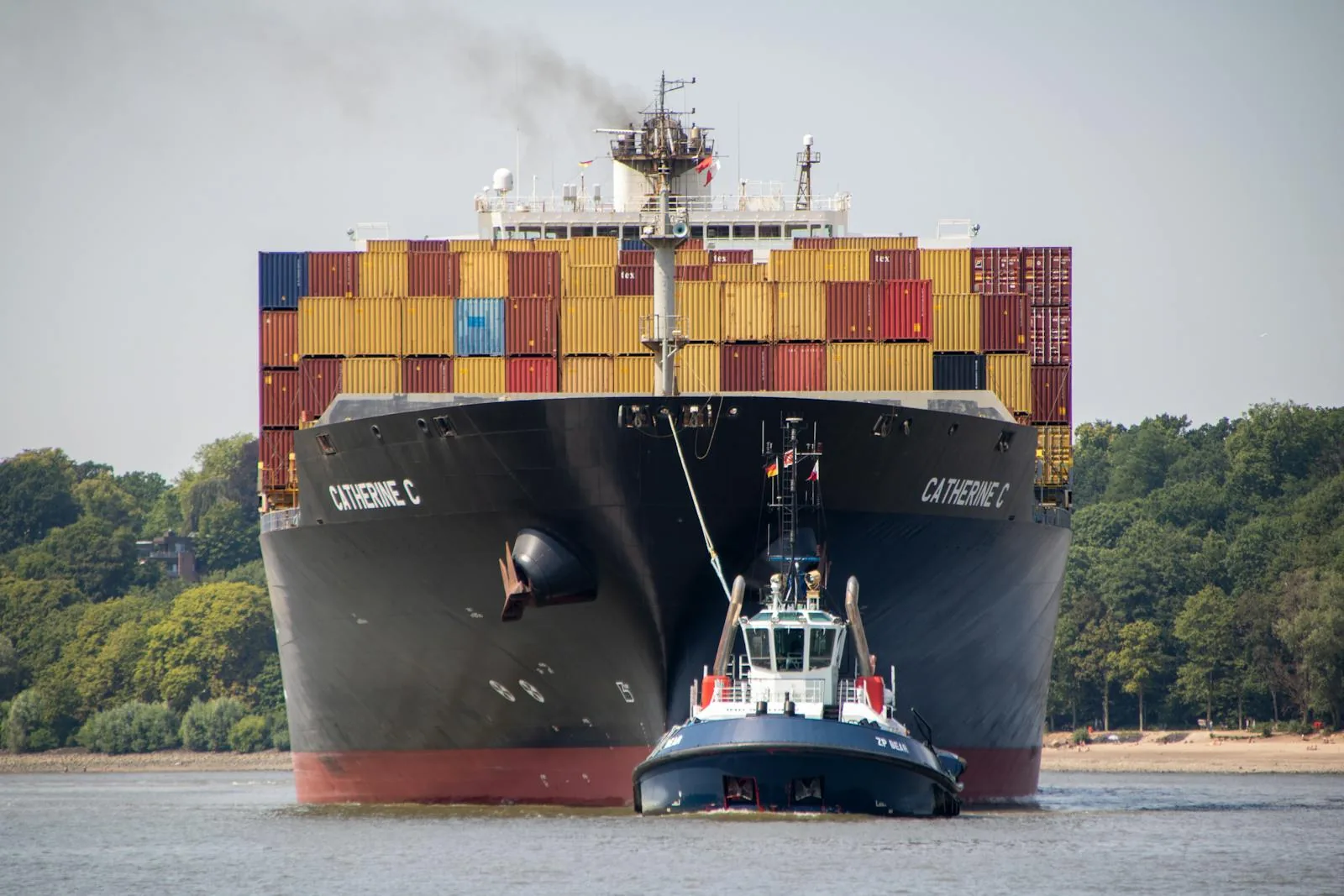
Ocean freight solutions for commercial and project cargo
Kenya Tradex coordinates sea freight through Mombasa with customs and inland delivery planning. Shipping options may include Maersk, PIL, MSC, CMA CGM, COSCO and Hapag-Lloyd, subject to the lane, sailing, equipment and cargo acceptance; these are carrier booking options, not a claim of formal partnership. For a comparable quote, share packed volume, gross weight, package dimensions, cargo type, origin, destination and Incoterms, with origin and destination charges itemised.
- FCL (Full Container Load) – Exclusive use of a 20ft, 40ft or 40HC container, subject to payload, door dimensions, packing and equipment availability; the container need not be full.
- LCL (Less than Container Load) – Shared space priced using volume and weight under the quoted weight-or-measure basis, with minimum freight and handling charges.
- Breakbulk & Project Cargo – Oversized and heavy lift handling
- Container updates – Carrier and terminal milestones, subject to source availability.
- Customs clearance and documentation – Coordinate KRA entry and release separately from shipping-line delivery orders and terminal or CFS release.
- Transit Bonds – For landlocked East African countries (Uganda, Rwanda, Burundi, Democratic Republic of the Congo, South Sudan)
- Door-to-Door Delivery – Across Kenya, Uganda, Rwanda, Burundi, Democratic Republic of the Congo and South Sudan
LCL Consolidation: Cost-effective shipping for smaller cargo
LCL combines smaller consignments in shared container space. Compare the total cost with FCL using both packed volume in cubic metres (CBM) and gross weight: LCL is commonly charged on the greater of CBM or metric tonnes under the quoted weight-or-measure basis, subject to minimums. There is no universal 15-CBM break-even point. Confirm origin handling, consolidation, ocean freight, destination deconsolidation/CFS handling, documentation, customs clearance, taxes and delivery; a low sea-freight rate is not the landed cost. See the 1-CBM China-to-Kenya cost guide for the cost categories to compare.
When LCL consolidation makes sense
- Small Businesses & Startups: Test new markets without full container commitment.
- Sample or trial orders: Useful for businesses testing products or new markets.
- Multi-supplier cargo: Practical when goods from different suppliers need to move in one shared freight flow.
- Cost-sensitive shipments: Compare all-in LCL and FCL totals, including minimums, destination charges and the handling needs of dense, fragile or non-stackable cargo.
- E-commerce fulfillment: Regular smaller shipments to international customers.
How LCL consolidation works
- Step 1: Share your cargo details, dimensions, weight and destination.
- Step 2: Shipments are grouped into shared container space based on route.
- Step 3: Documentation and customs processing are coordinated.
- Step 4: Cargo is loaded and moved through the sea freight route.
- Step 5: Cargo is deconsolidated and prepared for onward delivery.
Global & Regional Destinations
Routing through Mombasa can connect with the following markets, subject to available sailings and destination requirements. For outbound cargo, review export documents and vessel cut-off planning before booking:
- Asia: China (Shanghai, Ningbo, Guangzhou), India (Mumbai, Chennai), United Arab Emirates (Dubai, Jebel Ali), Singapore
- Europe: Rotterdam (Netherlands), Hamburg (Germany), Antwerp (Belgium), Felixstowe (United Kingdom)
- Americas: New York, Houston, Long Beach (USA), Santos (Brazil)
- East Africa (via transit bond): Uganda (Kampala), Rwanda (Kigali), Burundi (Bujumbura), Democratic Republic of the Congo (Goma, Bukavu, Lubumbashi), South Sudan (Juba)
How the ocean freight process works
- Step 1: Request a quote with cargo details and destination
- Step 2: We book space with shipping line and provide sailing schedule
- Step 3: Customs clearance and documentation at Mombasa port
- Step 4: Cargo release and door-to-door delivery or transit bonding
- Step 5: Check carrier milestones and arrange delivery, unpacking and empty-container return within the shipping line's agreed free time.
Separate shipping-line container time from port storage. For a combined demurrage-and-detention booking, count from discharge to empty-container return under the confirmed carrier terms. Kenya Tradex's indicative standard dry-container planning examples are 9 calendar days for Kenya, 28 for Uganda/Tanzania and 35 for Rwanda/Burundi/South Sudan/DRC; these are conservative planning examples, not published carrier entitlements. Carrier, equipment and booking terms control; reefers and special equipment vary. Check current carrier terms. Separately, KPA import-container storage allows 5 consecutive free days for domestic cargo and 15 for transit cargo, subject to the applicable tariff category and start date. CFS storage has its own terms. Compare taxes separately using our cargo import duty and tax calculator.
Ocean freight questions
- What ocean freight services does Kenya Tradex provide?
Kenya Tradex supports full container load (FCL), less than container load (LCL) consolidation, customs clearance, transit bonds, and inland delivery coordination for cargo moving through Mombasa port. - Do you handle cargo moving beyond Kenya to landlocked countries?
Yes. Kenya Tradex coordinates Mombasa cargo movements to Uganda, Rwanda, Burundi, DRC and South Sudan, with transit bond, route and destination customs requirements checked for each shipment. - Which shipping line options can you check?
Options may include Maersk, PIL, MSC, CMA CGM, COSCO and Hapag-Lloyd, subject to route, sailing, equipment and cargo acceptance. This does not imply a formal carrier partnership. - How are ocean freight shipments tracked?
We use available carrier and terminal milestones for shipment updates. Update frequency varies; this is not a guarantee of continuous real-time visibility. - What is LCL consolidation and when should I use it?
LCL shares container space with other consignments. Compare packed CBM and gross weight under the quote's weight-or-measure rule, minimum freight, handling and destination costs before choosing it over FCL. - What's the difference between FCL and LCL?
FCL gives exclusive use of a container; LCL shares space and adds consolidation and deconsolidation steps. Compare all-in costs, cargo protection, payload and timing rather than using a fixed volume threshold.